Article: How is natural perfume made? everything to know
How is natural perfume made? everything to know
Perfume is more than just a scent, it’s memory, identity, and emotion captured in a bottle. From the first spritz to the lingering dry down, every fragrance tells a story. But how exactly is perfume made?
Behind every beautiful fragrance is a careful balance of art, science, and craftsmanship. Whether you’re a fragrance lover or searching for your next signature scent, understanding how perfume is created will change the way you experience it forever.
The Foundation: What Is Perfume Made Of?
At its core, perfume is a blend of three key elements:
- Fragrance oils – derived from natural or synthetic sources
- Alcohol – used to dilute and disperse the scent
- Water – sometimes added to soften the blend
At DUX Collection, we focus on natural fragrance oils and alcohol free blends crafted from essential oils and botanical extracts. This creates a scent that feels complex, evolving, and deeply personal.
The Building Blocks: Fragrance Notes
Every perfume is structured in layers, known as notes. These notes unfold over time:
- Top notes: The first impression (fresh, citrusy, light)
- Heart notes: The core of the fragrance (floral, herbal, spicy)
- Base notes: The lasting depth (woody, amber, musky)
This layered composition is what gives perfume its journey, from the initial spray to the scent that lingers on your skin hours later.
Step 1: Sourcing the Ingredients
The journey begins with raw materials. For natural perfumes, these come from:
- Flowers (rose, jasmine, neroli)
- Woods (sandalwood, cedarwood)
- Resins (frankincense, myrrh)
- Citrus peels (bergamot, orange)
- Spices and herbs
Each ingredient carries its own aromatic profile, influenced by climate, soil, and harvesting methods. This is why natural perfumery is both beautiful and unpredictable—no two harvests are ever exactly the same.
Step 2: Extraction Methods
To turn raw materials into usable fragrance oils, their scent must be extracted. There are several methods:
Steam Distillation
The most common method for essential oils. Steam passes through plant material, capturing aromatic compounds.
Cold Pressing
Used mainly for citrus fruits. The oils are mechanically pressed from the peel.
Solvent Extraction
Used for delicate flowers that can’t withstand heat. This produces highly concentrated extracts.
CO₂ Extraction
A modern method that preserves the purity and complexity of the plant.
At DUX Collection, we prioritise methods that maintain the integrity of the natural ingredients—ensuring every note remains true to its origin.
Step 3: Blending the Fragrance
This is where perfume becomes art.
A perfumer, often called a “nose”, carefully blends different oils to create a harmonious scent. This process can take months or even years to perfect.
Blending requires:
- Deep knowledge of scent profiles
- Precision in ratios
- Creativity and intuition
A single fragrance can contain anywhere from 10 to over 100 ingredients, all balanced to create a seamless experience.
Step 4: Dilution
Once the fragrance concentrate is created, it is diluted with alcohol. This determines the strength of the perfume:
- Parfum (20–30% oil) – rich and long-lasting
- Eau de Parfum (15–20%) – balanced and popular
- Eau de Toilette (5–15%) – lighter and fresher
At DUX, our formulations are designed to provide longevity while remaining gentle on the skin.
DUX Rollerball Parfums are alcohol free. Instead of diluting our fragrance oil with alcohol we use natural oils like jojoba or coconut oil.
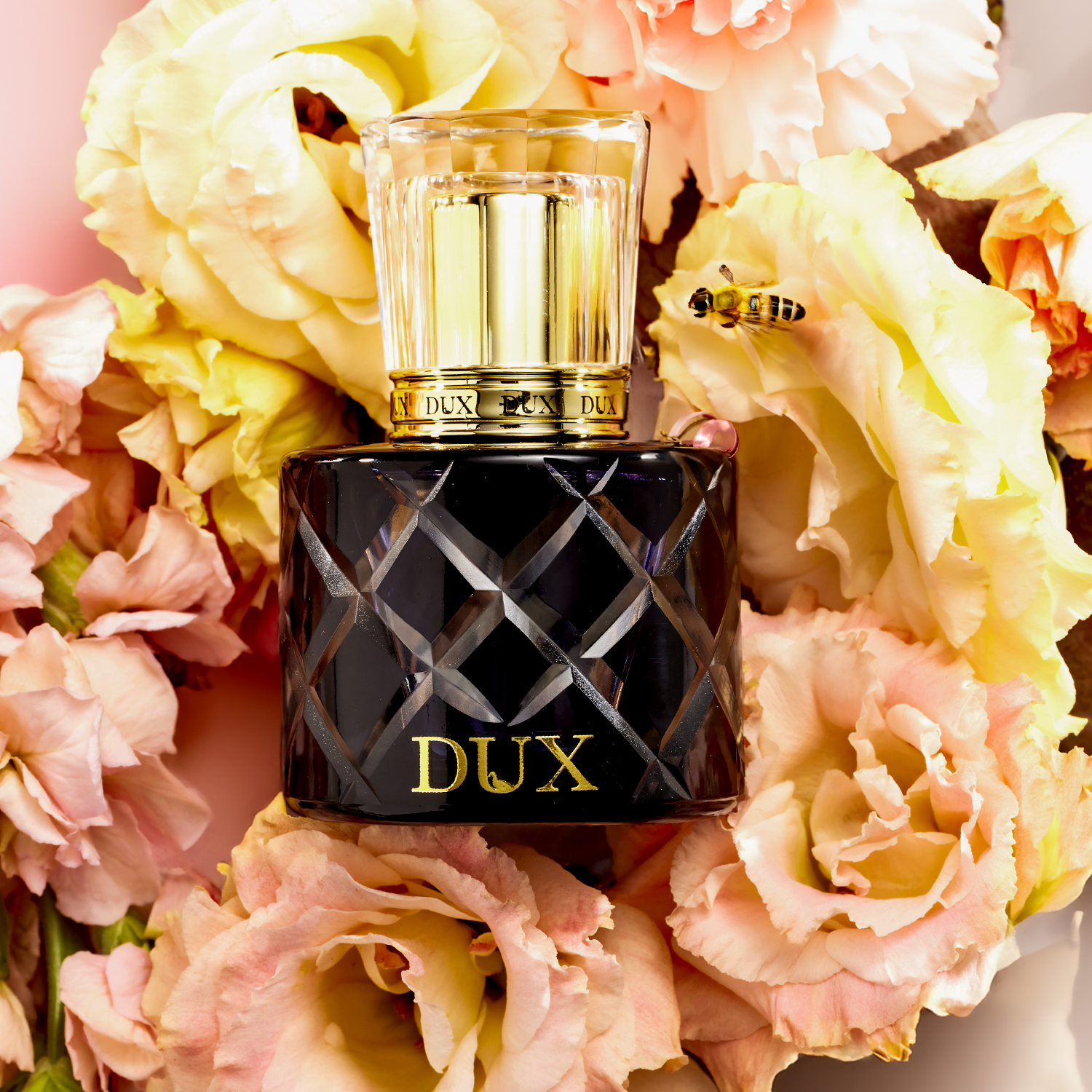
DUX Parfum Sprays are made using 100% sugarcane alcohol as the base. No denatured alcohol is used. Sugarcane alcohol is non-toxic and less likely to trigger allergic reactions or irritation in sensitive skin types.
Step 5: Maturation (Aging the Perfume)
Like fine wine, perfume needs time to mature.
After blending, the fragrance is left to rest for several weeks (or longer). This allows the ingredients to fully integrate, creating a smoother, more cohesive scent.
This step is often overlooked in mass production, but it’s essential for high-quality perfumery.
Step 6: Filtration and Bottling
Once matured, the perfume is filtered to remove any impurities and then carefully bottled.
For artisanal brands like DUX Collection, this process is often done by hand ensuring attention to detail at every stage.
The DUX Collection Difference
At DUX Collection, perfume is not mass-produced, it’s crafted.
Each fragrance is:
- Handmade in Sydney
- Created using natural, high-quality ingredients
- Designed to evoke emotion, memory, and connection
We believe perfume should feel like an extension of you—subtle yet unforgettable.
Perfume making is a delicate balance of science and storytelling. From raw botanicals to the final bottle, every step plays a role in creating something truly special.
The next time you apply your favourite fragrance, take a moment to notice its journey—the bright opening, the soft heart, the lingering base.
Because perfume isn’t just something you wear.
It’s something you experience.